The Overwhelmed Professional's Secret Weapon
You're juggling deadlines, endless emails, and the nagging feeling that your work, while necessary, isn't truly fulfilling. What if the secret to finding meaning wasn't an escape, but a radical shift in how you do what you already do? This feeling of disconnection is familiar to many, a sense that the tasks that fill our days don't align with our deeper values. It's a problem that the ancient philosophy of Karma Yoga speaks to directly, offering a framework for transforming duty into a source of spiritual growth and inner peace. By distinguishing between action driven by ego and action performed as an offering, Karma Yoga provides a way to find purpose in even the most mundane tasks. It's a subtle but profound shift, one that can turn the daily grind into a path of self-discovery and fulfillment. This approach to work and life is rooted in the idea that you've got the right to act, but not to the results, a concept that can be both liberating and terrifying.
Deconstructing "Action" in the Bhagavad Gita

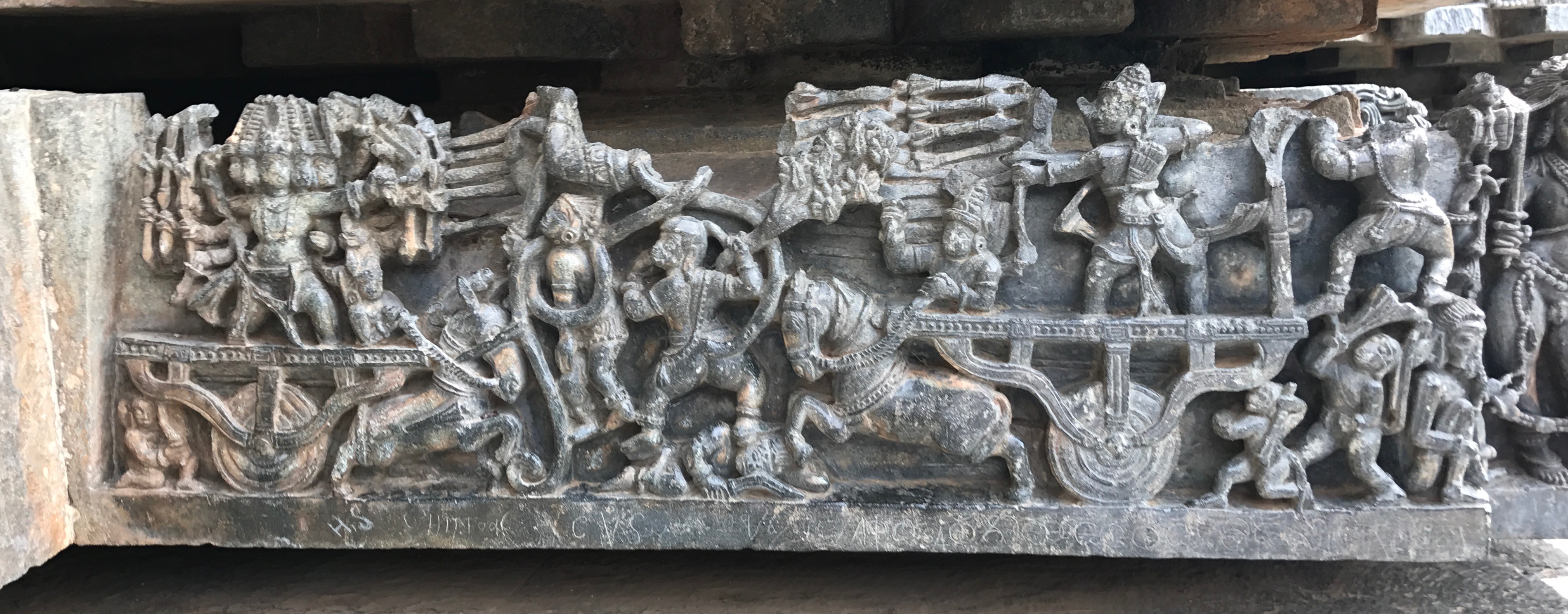
Krishna's counsel to Arjuna on the battlefield is a pivotal moment in the Bhagavad Gita, where he emphasizes that detachment from the fruits of action is central to liberating oneself from anxiety. It's a radical idea, one that challenges the common assumption that our actions are driven by a desire for specific outcomes. The Gita teaches that true Karma Yoga transcends simple task completion, instead emphasizing the importance of nishkama karma, or desireless action. This concept is often lost on modern professionals, who equate busy-ness with productivity, and as a result, find themselves stressed and dissatisfied.
The Bhagavad Gita's teachings on karma, akarma, and vikarma provide a nuanced understanding of action and its consequences. Karma refers to action that is performed in accordance with one's duty, while akarma is action-in-inaction, or the lack of action when it is required. Vikarma, on the other hand, is forbidden action, or action that is performed with selfish motives. It's a subtle distinction, but one that is crucial to understanding the principles of Karma Yoga. By recognizing the difference between these types of action, individuals can begin to cultivate a sense of detachment from the fruits of their labor.
Detachment from the fruits of action, or phala tyaga, is a core principle of Karma Yoga. It's not about being indifferent to the outcomes of our actions, but rather about letting go of our attachment to specific results. When we're motivated by personal gain or ego gratification, our actions become sakama karma, or action with desire. This type of action can lead to anxiety and stress, as we become fixated on achieving specific outcomes. In contrast, nishkama karma allows us to act with freedom and spontaneity, unencumbered by our desires and expectations. It's a state of being that is both liberating and terrifying, as it requires us to let go of our need for control and certainty. You've got to consider the possibility that your actions are not just about achieving a specific goal, but about cultivating a sense of inner freedom and peace.
The Ego Trap: Why Your Work Feels Empty

The modern professional landscape is dominated by an ego-centric approach to work, where personal achievement, recognition, and career advancement are the primary drivers. This focus on external validation creates a sense of self-worth that's deeply tied to our job title, salary, and the praise of others. You've probably experienced this firsthand, feeling a sense of hollowness after achieving a difficult goal, only to realize that the satisfaction was short-lived. The frustration of a project not going as planned or the anxiety of a performance review can be overwhelming, and it's all too easy to get caught up in the mental turmoil that comes with attachment to outcomes.
This attachment is rooted in the Gunas, those fundamental forces that influence our actions and decisions. When we're driven by Rajas, the energy of ambition and competition, we're more likely to be attached to success and fearful of failure. Tamas, the energy of inertia and complacency, can lead to a sense of stagnation and disconnection from our work. Sattva, the energy of balance and harmony, is often overlooked in the pursuit of external validation. It's a delicate balance, and one that's easy to disrupt.
Karma Yoga offers a direct antidote to this ego-driven approach, redirecting our focus from the self to the task and the purpose. By letting go of our attachment to outcomes and external validation, we can cultivate a sense of inner peace and freedom. It's not about ignoring our desires and ambitions, but about recognizing that they don't define our worth as individuals. When we focus on the task at hand, rather than our own ego, we can find a sense of fulfillment and purpose that's not tied to external circumstances. This shift in perspective can be liberating, allowing us to approach our work with a sense of curiosity and engagement, rather than anxiety and fear, and that's a truly profound change.
Practical Application: Weaving Karma Yoga into Your 9-to-5

Viewing challenges and setbacks as opportunities for learning and growth can be a game-changer in our professional lives, it's a mindset that allows us to cultivate equanimity, even in the face of adversity. This perspective is rooted in the idea that our worth isn't defined by our successes or failures, but by our ability to learn and adapt. By adopting this mindset, we can begin to see obstacles as stepping stones for growth, rather than as personal failures. You've likely experienced this shift in perspective before, where a difficult situation ultimately led to a valuable lesson or insight.
When we start our workday with a sankalpa, or intention, we frame our actions as a service or offering, rather than a personal pursuit. This simple act can help us stay focused on the task at hand, rather than getting caught up in our own ego or expectations. It's a subtle but powerful shift, one that can help us approach our work with a sense of curiosity and engagement. Practicing mindfulness during work can also be incredibly helpful, it allows us to observe our thoughts and emotions without judgment, and gently bring our focus back to the present action.
Detaching from the results of our efforts can be difficult, but it's a crucial aspect of Karma Yoga. By focusing on doing our best with diligence and sincerity, we can begin to let go of our attachment to specific outcomes. This is similar to the concept of sthitaprajna, or one of steady wisdom, where we strive to remain calm and composed, regardless of the circumstances. That's not to say it's easy, but with practice, we can develop a sense of acceptance and grace, even in the face of uncertainty. You don't have to be a yogi to appreciate the value of this approach, it's something that can be applied to any profession or pursuit, and that's what makes it so powerful. It's a way of working that can bring a sense of fulfillment and purpose to our daily lives.
Beyond the Office: Karma Yoga as a Life Philosophy

Seeing the divine in all beings and actions is a powerful concept that can transform our lives. It's not just about how we interact with others, but also how we perceive the world around us. When we start to see every person, every task, and every moment as a sacred opportunity for growth and service, our entire perspective shifts. We begin to approach our relationships, family duties, and community engagement with a sense of reverence and care, fostering healthier connections and a deeper sense of fulfillment.
This perspective is not limited to grand gestures or monumental tasks, but can be applied to the most mundane chores and responsibilities. By transforming our daily routines into sacred acts of service, we cultivate a sense of contentment and reduce our constant seeking for external happiness. It's a subtle but profound shift in our inner orientation, one that allows us to find joy and meaning in the simplest of tasks. You've likely experienced this at some point, where a small act of kindness or a moment of genuine connection has brought a sense of happiness and fulfillment.
Karma Yoga is often misunderstood as a call to abandon our responsibilities and worldly duties. That's not the case, it's about performing them with a different inner orientation. It's about approaching our tasks and relationships with a sense of acceptance, detachment, and devotion. By doing so, we can find spiritual liberation even amidst our worldly duties. It's a way of living that's not about escaping our responsibilities, but about transforming them into opportunities for growth, service, and self-realization. That's what makes Karma Yoga such a powerful and relevant philosophy for modern life, it offers a path to inner peace and fulfillment that's accessible to anyone, regardless of their profession or circumstances.
Finding Freedom in Your Daily Duty
Karma Yoga transforms our perception of work from a burden into a path of spiritual growth and self-discovery. By acting without attachment to outcomes and dedicating our efforts selflessly, we dismantle the ego's hold and find inner peace. This shift in perspective is profound, allowing us to experience meaning in our daily tasks, reduce stress, and live more fully in the present. It's a simple yet powerful approach that can be applied to any aspect of life. Today, choose one task and perform it with the intention of offering it as service, focusing solely on the action itself without dwelling on the outcome. As you do, you may find that the sense of purpose and fulfillment you've been seeking was within you all along, waiting to be discovered in the midst of your everyday activities.
Sources & References
- An Empirical Study on the Importance of Karma Yoga in Modern ...
- The Transformative Power of Karma Yoga: A Systematic Review of ...
- Karma Yoga: Finding Meaning and Purpose in the Modern World
- [PDF] Lessons from Bhagavad Gita | Yog Manthan, Vol.03, June 2025
- What is the practice of Karma Yoga in modern times? Can one truly ...
- Doesn't the concept of Karma Yoga contradict modern Psychology?
- What is Karma Yoga and how can we take right action? - Ram Dass
- How Can Karma Yoga be Practiced in Contemporary Life?