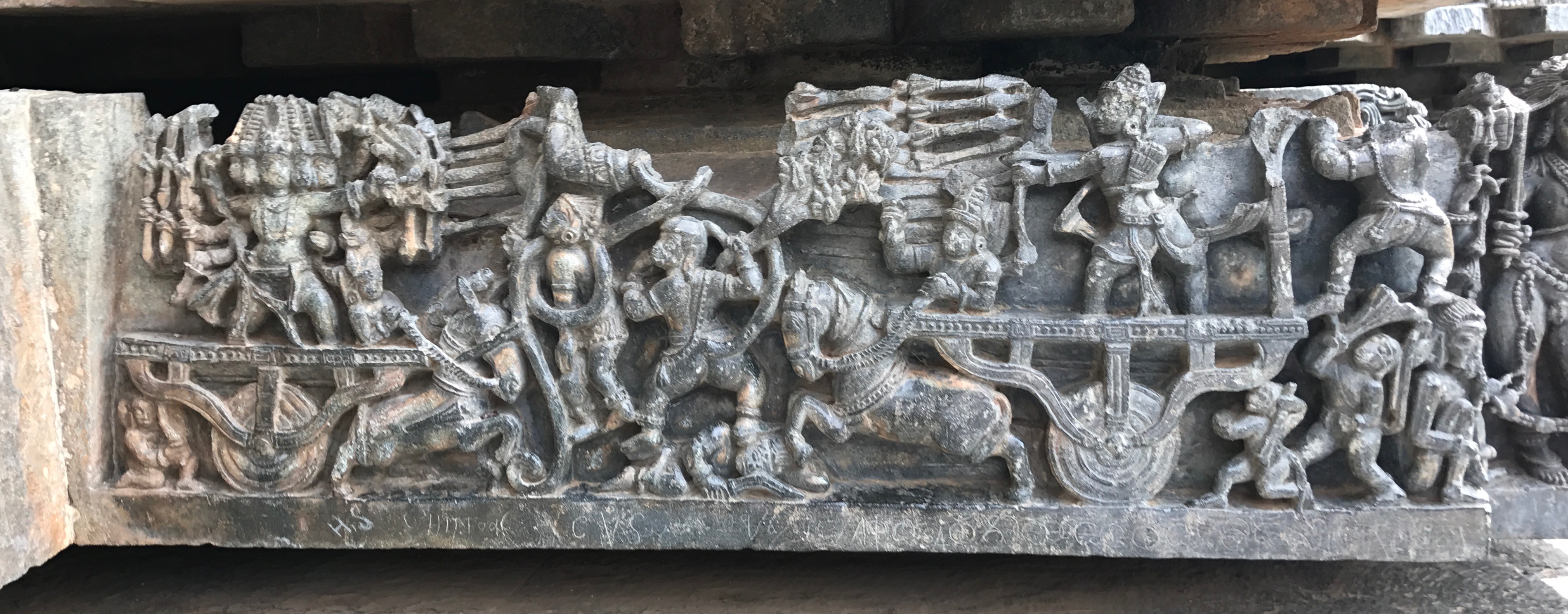
Feeling Overwhelmed? The Gita's Ancient Blueprint for Modern Stress
In the relentless pace of deadlines, career pressures, and personal aspirations, do you ever feel like you're Arjuna on the battlefield, paralyzed by doubt and overwhelmed by the path ahead. You're sitting at your desk, staring at a screen, wondering how to meet the expectations of your boss, your family, and yourself. The Bhagavad Gita's depiction of Arjuna's dilemma resonates deeply, as it's easy to get caught up in the idea that our actions have direct control over outcomes. Krishna's words to Arjuna offer a different perspective, one that can transform the way we approach our daily tasks and struggles. By letting go of attachment to specific results, we can find a sense of freedom and purpose in our actions. This shift in perspective can be a powerful tool in navigating the challenges of modern life. It's a concept that can be applied to even the most mundane tasks, turning routine into a spiritual practice.
Navigating the Battlefield of Your Career with Karma Yoga

The concept of Nishkama Karma, or action without attachment to results, is a powerful tool for navigating the challenges of professional life, as outlined in the Bhagavad Gita's Chapter 2 teachings. It's a idea that can liberate you from the anxiety of outcomes, allowing you to focus on the work itself, rather than the potential rewards or consequences. By letting go of attachment to specific results, you can approach your tasks with a sense of freedom and purpose, unencumbered by the fear of failure or the pressure to succeed. This mindset is not about being indifferent to the outcome, but about being fully engaged in the process.
Performing one's Swadharma, or own duty, with sincerity and skill is also crucial, even when faced with challenging or mundane tasks. Arjuna's initial reluctance to fight in the battle of Kurukshetra is a classic example of this struggle, as he grapples with the idea of doing his duty, despite his personal reservations. Similarly, in our own careers, we may be called upon to perform tasks that don't align with our passions or interests, but it's in these moments that we must draw upon our sense of duty and responsibility, and strive to execute them with excellence and integrity.
Understanding the interconnectedness of actions, as described in the Gita's Chapter 3, can also foster a sense of teamwork and cooperation in the workplace, reducing interpersonal conflicts and promoting a sense of collective purpose. When you recognize that your actions have a ripple effect, impacting not just your own work, but the work of those around you, you're more likely to approach your tasks with a sense of consideration and respect for others. By focusing on the quality and intention of your work, rather than the potential outcomes, you can cultivate a sense of detachment from the fruits of your labor, and find a deeper sense of fulfillment and purpose in your professional life. You've got to trust that the work itself is what matters, not just the end result.
The Mind as a Friend or Foe: Gita's Wisdom for Inner Peace

Krishna's description of the mind as a "restless, strong, and impetuous" force is a stark reminder of the challenges we face in our daily lives. You've likely experienced this firsthand, with your mind jumping from one thought to another, making it difficult to focus on the task at hand. This mental chatter and distraction are all too common in modern life, and it's easy to get caught up in the cycle of stress and anxiety that comes with it. But the Gita offers some practical advice on how to control the mind and cultivate mental resilience.
The practice of Abhyasa, or consistent practice, is a key component of the Gita's approach to mind control. By committing to a regular practice, such as meditation or yoga, you can begin to calm the mind and develop greater focus. This is paired with the concept of Vairagya, or non-attachment, which involves letting go of your attachment to specific outcomes and desires. When you're no longer controlled by your desires, you're free to approach life with a sense of detachment and clarity.
The Gita also teaches the importance of equanimity, or Samatvam, in the face of dualities like pleasure and pain, success and failure. This means cultivating a sense of inner stability, regardless of what's happening in your life. It's not about avoiding challenges or difficult emotions, but about learning to approach them with a sense of calm and composure. For example, when you're in the midst of a demanding project, it's easy to get caught up in stress and anxiety. But by applying the principles of Abhyasa and Vairagya, and cultivating a sense of equanimity, you can manage that stress and stay focused on the task at hand. You can trust that the work itself is what matters, and that's what will get you through the tough times.
Finding the Divine in the Mundane: Devotion Beyond the Temple

The idea that any sincere offering, no matter how small, is divine is a profound concept in the Gita. It's expressed in the statement "If one offers Me with love and devotion a leaf, a flower, fruit or water, I will accept it," which implies that the act of offering itself is what makes something sacred, not the thing being offered. This has huge implications for how we live our daily lives, as it suggests that every action can be an act of worship if done with the right attitude.
You don't have to be in a temple to experience the divine, you can find it in everyday activities. Dedicating your daily work to a higher purpose or divine principle can transform it from a chore into an act of worship. It's about seeing the divine in every interaction, whether that's serving a client or caring for family, and using those interactions as a way to cultivate a sense of devotion.
When you start to see the world in this way, every action becomes an opportunity for spiritual connection. You can cultivate a devotional attitude throughout the day by being mindful of your intentions and actions. It's not always easy, but it's worth it. By making every action a form of worship, you can infuse your daily life with a sense of sacredness and meaning. This is what Bhakti Yoga is all about, and it's something that can be practiced in every moment, no matter what you're doing.
The Power of Renunciation: Letting Go for Greater Freedom

The concept of renunciation in the Bhagavad Gita is often misunderstood as a call to physical austerity, but it's actually about letting go of attachment to desires and outcomes. Chapter 5 of the Gita emphasizes this distinction, encouraging you to release your grip on the need to control every aspect of life. When you do, you'll likely find that your anxiety decreases and your adaptability increases. You don't have to be controlled by your desires and expectations.
Letting go of the need to control can be incredibly liberating. It's like releasing a tight fist, you've been holding onto something so tightly that you've forgotten what it's like to have an open hand. When you're no longer driven by ego-driven ambitions, you open yourself up to new possibilities and experiences. For instance, imagine a person who's been striving to get a specific job, and they've defined their entire self-worth by achieving that goal. If they release their attachment to that outcome, they may find that they're free to explore other opportunities that bring them genuine contentment.
The Gita's concept of renunciation is closely tied to the practice of mindful living. It's about observing your thoughts and desires without being consumed by them. You can practice this by paying attention to your intentions and actions, and being mindful of when you're getting caught up in your ego-driven desires. By letting go of your attachment to specific outcomes, you can cultivate a sense of clarity and freedom that's not dependent on external circumstances. This is the power of renunciation, and it's something that can be practiced in every moment, no matter what you're doing. You've got the power to choose how you respond to life, and that's a pretty amazing thing.
Your Personal Gita — A Daily Practice, Not Just a Book
The Bhagavad Gita is not merely ancient scripture but a practical guide for navigating the complexities of modern life. Its wisdom offers a path to peace and purpose, one that's accessible to anyone willing to put its principles into practice. By embracing Karma Yoga, cultivating mental equanimity, practicing devotional attitude in all actions, and understanding true renunciation, you can transform your daily experiences into a profound spiritual journey. This journey is not about achieving some distant goal, but about being present in each moment, don't let your ego dictate your actions. You've got the power to choose how you respond to life, and that's a powerful thing. Choose one principle from the Gita today and consciously apply it to a specific challenge you face, observing the subtle shifts it brings. As you do, you'll find that the Gita's wisdom seeps into your daily life, guiding you toward a more authentic, meaningful existence.
Sources & References
- Applying the Gita in Daily Life | PDF | Bhagavad Gita | Krishna - Scribd
- Bhagavad Gita - Lessons for Your Daily Life | Podcast on Spotify
- Applying Bhagavad Gita lessons to daily life - Facebook
- Timeless Lessons from the Bhagavad Gita for Modern Life
- Practical application of the Bhagavad Gita in Daily Life! - YouTube
- Everyday Lessons from the Bhagavad Gita – Vedanta USA in New York and New Jersey
- How to Apply the Teachings of the Bhagavad Gita in Modern Life: Practical Secrets : r/AdvaitaVedanta
- How to Practice Bhagavad Gita Teachings Everyday: A Simple Guide for Modern Life