Beyond "Duty" – Unpacking the True Essence of Dharma
If you've ever heard Dharma described simply as "duty," you've only caught a glimpse of its vast meaning. This simplification doesn't account for the complexity of a concept that encompasses both the universal order and an individual's path. Dharma is what makes a river flow effortlessly to its destination, and it's also what guides a person's actions in alignment with their inherent nature. It's the principle that governs the harmony of the cosmos, from the rotation of planets to the balance of ecosystems. In the context of human life, understanding Dharma is crucial for making sense of the world and our place in it, allowing us to navigate life's challenges with purpose and integrity. The distinction between the universal Dharma and an individual's unique svadharma is critical, as it recognizes that while there's a common underlying order, each person's path is distinct. This nuanced understanding of Dharma can transform our approach to life.
Dharma as Cosmic Order and Righteousness (Rta and Sanatana Dharma)

The concept of Rta, or the cosmic law of order and balance, is a fascinating aspect of Vedic thought that underpins the understanding of Dharma. It's the principle that governs everything from the movements of celestial bodies to the cycles of nature, ensuring harmony and balance in the universe. This idea is rooted in ancient Vedic texts, which describe Rta as the universal law that maintains order and coherence. You've likely heard of the term before, but its implications are profound: Rta is what keeps the cosmos running smoothly.
Dharma, in this context, is closely related to the concept of Sanatana Dharma, or the eternal, unchanging principles of righteousness. These principles form the bedrock of Hindu ethics and spirituality, and are considered applicable across all times and places. They provide a moral framework that guides individual behavior, preventing a purely utilitarian view of life. It's worth noting that Sanatana Dharma is not just a human construct, but is seen as an expression of divine law and natural law, which work together to maintain universal harmony.
The relationship between Rta, Sanatana Dharma, and individual Dharma is complex. On one hand, Rta and Sanatana Dharma provide the overarching framework within which individual Dharmas are to be understood and practiced. On the other hand, individual Dharmas must be guided by the principles of Rta and Sanatana Dharma, ensuring that personal actions contribute to the larger cosmic order. This interplay between the universal and the individual is what makes Dharma so rich and nuanced. It's a delicate balance that requires careful consideration of one's actions and their impact on the world.
Svadharma – Your Unique Path and Responsibilities

The Bhagavad Gita presents a nuanced view of Dharma, one that's both universal and highly personal. It's here that the concept of svadharma emerges, referring to one's own inherent duty, prescribed by innate qualities, stage of life, and social role. You've got a unique set of circumstances that dictate your path, and it's not about choosing a path, but about recognizing the one you're already on.
Svadharma is determined by factors like guna, or innate qualities, ashrama, or stage of life, and varna, or social role. A warrior's duty, for instance, is different from a scholar's, and a parent's duty is distinct from a child's. These roles aren't hierarchical, but complementary, each contributing to the larger social fabric.
When svadharma clashes with societal expectations or personal desires, conflict arises. A warrior may feel pressured to abandon their duty for a more "peaceful" path, or a scholar may be tempted to use their knowledge for personal gain. The Bhagavad Gita advises navigating such dilemmas through detachment and adherence to one's essential duty. It's a call to fulfill your role, not because it's imposed upon you, but because it's inherently yours.
In practice, this means embracing your unique responsibilities, whether that's protecting others, pursuing knowledge, or nurturing a family. It's not about comparing yourself to others or trying to fit into someone else's mold. Svadharma is about recognizing your place in the world and fulfilling your duty, without attachment to specific outcomes or external validation. That's a difficult balance to strike, but it's one that's essential to living a life of integrity and purpose.
Dharma in Action: Navigating Life's Moral Landscape

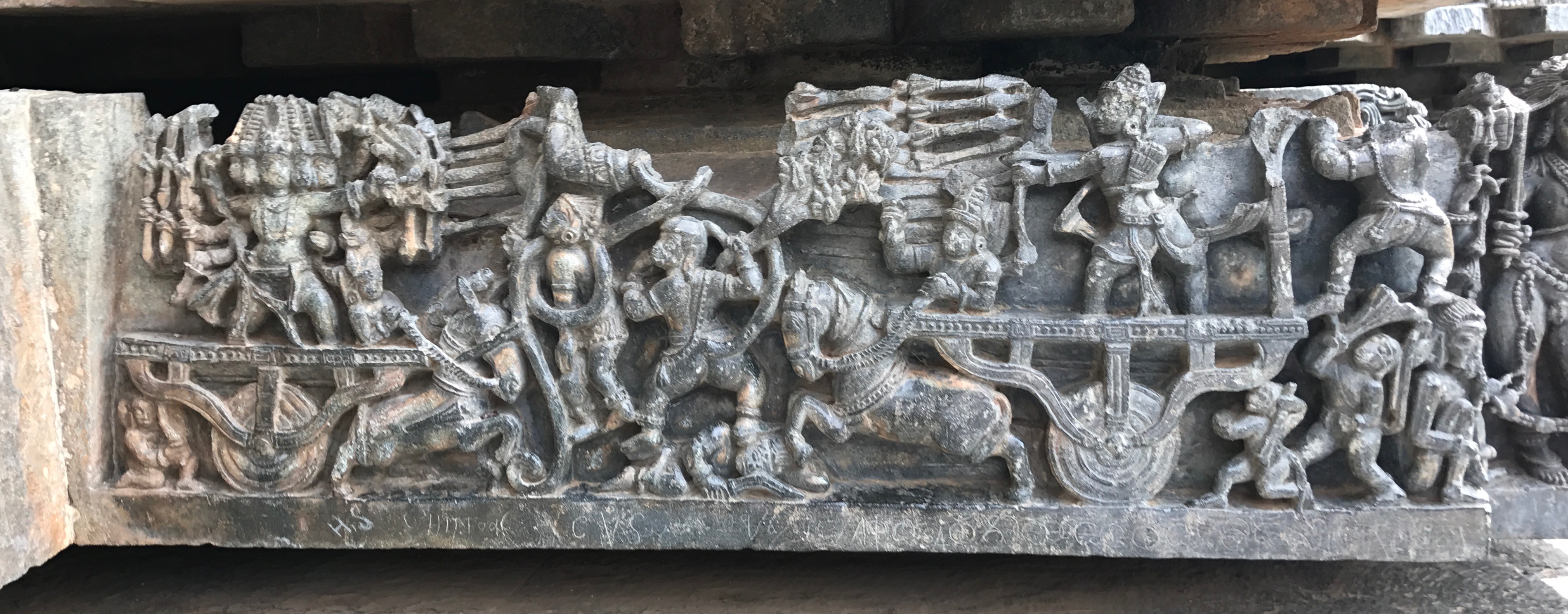
The Mahabharata War is a prime example of a complex Dharma Sankat, where upholding righteousness involved difficult choices and significant personal cost. It's a story of conflicting duties, where characters like Arjuna and Yudhishthira had to navigate their sense of duty to their family, kingdom, and personal values. This moral dilemma is a classic illustration of how Dharma can provide a compass for ethical conduct, even in the most challenging situations.
Dharma emphasizes principles like truthfulness, non-violence, integrity, and compassion, which serve as a guide for making tough decisions. However, it's not always easy to apply these principles in real-life situations. That's where the concept of Dharma Sankat comes in - it acknowledges that conflicting duties can arise, and it suggests resolving these through prayer, introspection, and seeking wise counsel.
Living by Dharma is an ongoing practice of self-awareness and conscious choice, rather than a static achievement. It's about being mindful of your actions and their impact on others, and continually striving to become a better version of yourself. This journey of becoming a Dharmic individual is not always easy, but it's one that's essential to living a life of integrity and purpose. You've got to be willing to confront your own flaws and weaknesses, and make difficult choices when necessary.
It's a difficult path to follow, but the payoff is worth it - a life of authenticity, compassion, and wisdom. That's what Dharma is all about, and it's something that you can apply to your daily life, no matter what your circumstances are. It's not about achieving some kind of spiritual enlightenment, but about being a good person, and treating others with kindness and respect.
Living a Life of Purpose Through Dharma
Dharma is the web that connects individual purpose to cosmic order, it's what gives life meaning and direction. Understanding and living by your svadharma is key to personal fulfillment and societal contribution. It's not a burden, but a guiding principle for a meaningful and righteous life. You've got a unique role to play, and living by your svadharma is what makes that possible. Reflect on one aspect of your svadharma today and consider how you can engage with it more consciously and with greater integrity. That's where the real growth happens, and it's a journey that's worth taking, one that can bring a sense of purpose and fulfillment to your life.
Sources & References
- Dharma (religious concept) | Religion and Philosophy | Research Starters | EBSCO Research
- The Concept of Dharma | Springer Nature Link
- Dharma concept in Indian religions - Facebook
- Dharma: The Social Order | The Pluralism Project
- Dharma - Wikipedia
- Explain Dharma? : r/hinduism - Reddit
- 5 things to know about dharma
- Understanding Dharma: A Guide to Living with Purpose and Integrity!