Echoes of an Ancient Civilization
A civilization that gave the world yoga, sophisticated philosophies, and the concept of zero, whose cultural roots run deeper than recorded history, is a fascinating subject. The concept of zero, for instance, was not just a mathematical innovation, it represented a profound shift in how ancient Indians thought about the nature of reality. You've likely practiced yoga without realizing its roots in ancient Indian spiritual inquiry, where the goal was not just physical postures, but a deeper understanding of the self. That's because ancient Indian culture was deeply intertwined with spiritual and philosophical ideas that shaped daily life. It's surprising how these ideas still influence modern society, from the way we think about time to our understanding of the universe. The ancient Indians' concept of time, for example, was cyclical, not linear, and this perspective on time had a profound impact on their daily life and societal norms.
The Spiritual Bedrock: Dharma and the Quest for Truth

The concept of Dharma is often misunderstood as merely a religious duty, but it's so much more than that - it's a cosmic order, a righteous way of living that permeates every aspect of life. In the Vedas and Upanishads, Dharma is described as a multifaceted concept that encompasses not just religious rituals, but also social norms, moral principles, and a deep understanding of the universe. The Vedic worldview, for instance, is based on the concept of Rta, or cosmic order, which is maintained through rituals and sacrifices that aim to balance the individual's life with the natural world. You've probably heard of the elaborate rituals and sacrifices that were a hallmark of ancient Indian culture, but what's interesting is that these rituals were seen as a way to maintain the delicate balance of the universe, rather than just appease gods.
The philosophical blossoming in the Upanishads took this idea further, introducing concepts like Brahman, the ultimate reality, and Atman, the individual self. The Upanishads explore the interconnectedness of Brahman and Atman, laying the foundation for Advaita Vedanta, a philosophical tradition that seeks to understand the nature of reality. It's fascinating to see how this spiritual quest permeated every level of ancient Indian society, influencing concepts of duty and responsibility for different social strata, known as varna, and life stages, known as ashrama. The idea of Dharma as a guiding principle was so central to ancient Indian life that it shaped the way people lived, worked, and interacted with each other, creating a complex social hierarchy that was both rigid and flexible at the same time. That's what made ancient Indian culture so unique, and its legacy continues to influence modern society in subtle but profound ways.
Pillars of Thought: Schools of Ancient Indian Philosophy

The concept of moksha, or liberation, stands as a unifying thread across many ancient Indian philosophical systems, with diverse paths such as karma, jnana, and bhakti proposed to achieve it. You've likely heard of these terms before, but it's surprising how often they're misunderstood. At its core, the pursuit of moksha represents a deep-seated desire to transcend the cycle of birth and death, and it's this desire that drove the development of various philosophical schools. The six orthodox schools of Indian philosophy, including Nyaya, Vaisheshika, Samkhya, Yoga, Mimamsa, and Vedanta, each offer unique perspectives on the nature of reality and the path to liberation. Nyaya, for instance, focuses on logic and epistemology, while Vaisheshika explores the nature of atoms and the universe.
That's a complex topic, but it's essential to understand the basics. The heterodox schools, primarily Buddhism and Jainism, introduce foundational principles such as ahimsa, or non-violence, which contrast with some Vedic traditions. Buddhism, in particular, offers a distinct path to liberation through the Eightfold Path and the Four Noble Truths. Jainism, on the other hand, emphasizes the importance of non-violence and the pursuit of spiritual liberation through ascetic practices. These philosophical ideas weren't just confined to academic circles, but were also popularized through epic narratives like the Mahabharata and Ramayana, which continue to influence Indian thought and culture to this day.
The Mahabharata, with its complex characters and moral dilemmas, offers a rich tapestry of philosophical and ethical teachings, while the Ramayana explores the nature of duty and devotion. It's fascinating to see how these stories have been retold and reinterpreted over the centuries, reflecting the changing values and concerns of Indian society. As you explore these ancient philosophical systems, you'll notice that they're not just relics of the past, but living traditions that continue to shape Indian thought and culture. The pursuit of moksha remains a powerful symbol of the human quest for transcendence and liberation, and its influence can still be felt in modern Indian society.
A Flourishing Civilization: Arts, Sciences, and Society

Ancient India's most striking achievement is its development of the decimal system and the concept of zero, which completely transformed mathematics and astronomy. You've likely heard of the Indian astronomer Aryabhata, who proposed the heliocentric model of the universe, but it's equally surprising to learn that ancient Indian mathematicians made significant contributions to the field of algebra. The foundational texts of Ayurveda, like the Charaka Samhita, demonstrate a sophisticated understanding of human anatomy and medicine, which is still studied today.
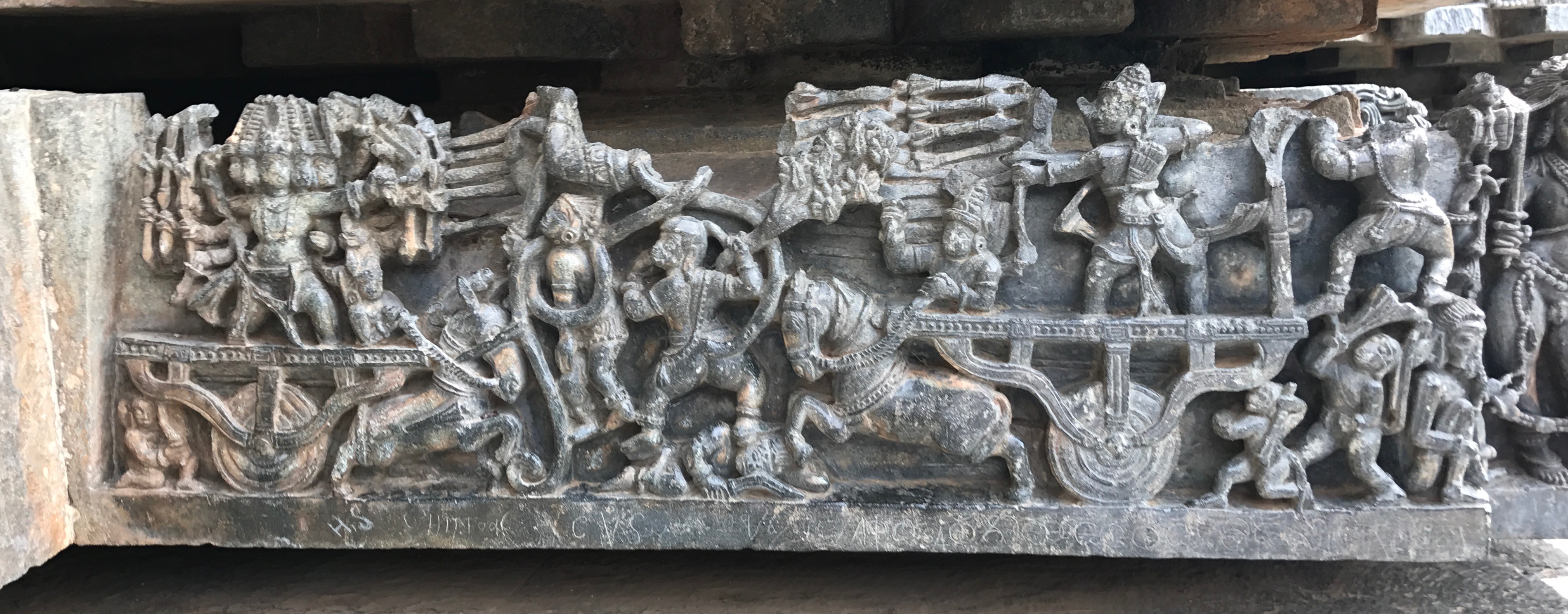
That's not all - ancient India was also home to a rich artistic tradition, with sculptures and architecture that often reflected spiritual themes. The cave temples of Ellora and the stupas of Sanchi are stunning examples of this, with intricate carvings and statues that depict scenes from Hindu mythology. Classical dance and music were also highly valued, with the Natya Shastra being one of the oldest known treatises on the performing arts.
The social structures of ancient India, including the varna system and the ashrama system, were intended to provide a sense of order and organization to society. The varna system, with its four main categories of brahmins, kshatriyas, vaishyas, and shudras, was meant to reflect the different roles and responsibilities that people had in society. The ashrama system, which divided life into four stages - student, householder, retiree, and renunciate - provided a framework for people to navigate the different stages of their lives.
The Indus Valley Civilization, with its sophisticated urban planning and trade networks, is a testament to the highly organized and prosperous society that existed in ancient India. The cities of Mohenjo-Daro and Harappa were designed with advanced drainage systems and grid-like streets, showing a high degree of planning and engineering expertise. This level of sophistication is a reminder that ancient India was a flourishing civilization that made significant contributions to many fields, and its legacy continues to shape Indian society today.
The Enduring Legacy of Ancient India
Ancient India's culture was characterized by a profound spiritual orientation, where Dharma guided all aspects of life. This spiritual foundation supported a wide range of philosophical schools, each offering unique perspectives on reality and liberation. The era's innovations in arts, sciences, and social organization also laid groundwork that continues to resonate globally. You've seen how ancient Indian cities like Mohenjo-Daro and Harappa demonstrated advanced engineering skills. That's a testament to the culture's ingenuity. Reflect on one principle or practice from ancient Indian culture that you can incorporate into your own life today.
Sources & References
- Cultural Development - Ancient India History Notes
- Culture of India - Wikipedia
- Ancient India - World History Encyclopedia
- Ancient Civilizations: India - National Geographic Education
- India - Ancient History, Culture, Religion | Britannica
- The Fascinating History of Ancient India's Cultural and Historical Roots...
- Lecture 11 - ANCIENT INDIA
- History Summarized: Ancient India - YouTube