Unveiling the True Self Beyond the Ego
If you ask someone "Who are you?", they'll likely tell you their name, profession, or family ties – but these are all temporary labels. You've probably given this answer yourself, without a second thought. But what if the "you" that truly exists is something far more profound and eternal, a constant amidst life's turmoil. The concept of Atman, or the individual self, is central to this inquiry, and it's not just about personal identity, but about the very nature of existence. It's the idea that there's a fundamental difference between the empirical self, the ego that experiences the world, and the eternal Atman, which is often described as Sat-Chit-Ananda, or existence, consciousness, and bliss. This distinction has profound implications for how we understand ourselves and our place in the world. The Atman is not just a philosophical concept, but a living, breathing reality that can be experienced, and it's this experience that's said to bring about liberation, or Moksha.
The Atman as the Unchanging Witness

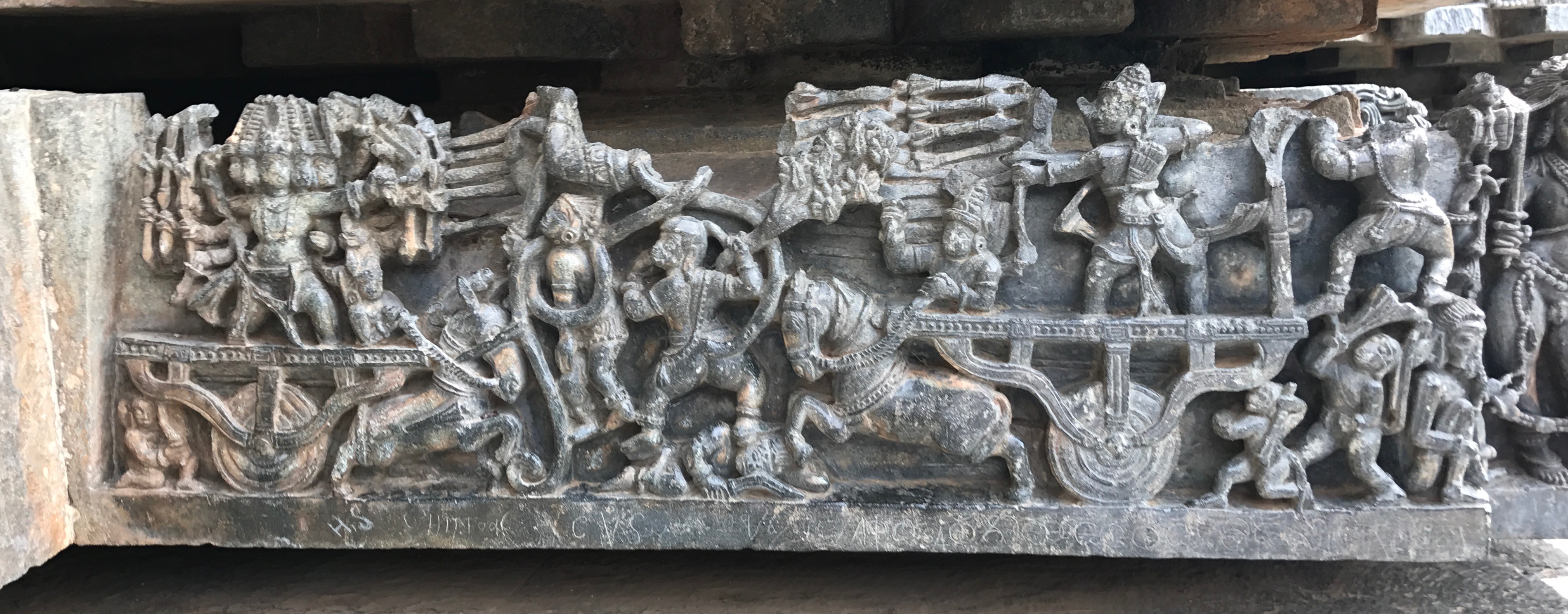
The Upanishads describe the Atman as the inner controller, or Antaryamin, that's distinct from the physical body, senses, and mind. The Katha Upanishad uses the analogy of a chariot to illustrate this concept, where the Atman is the charioteer, the body is the chariot, the senses are the horses, and the mind is the reins. This distinction is crucial, as it highlights the Atman's role as the eternal, unborn, undying, and unperishing essence that witnesses birth, death, and all transformations without being affected by them. You've probably heard this concept described as the unchanging witness, but what does that really mean?
It means the Atman is not born, it does not die, and it's not affected by the constant changes that occur in life. The Advaita Vedanta perspective takes this concept further, describing the Atman as pure consciousness, or Chaitanya, which is the substrate of all awareness. This pure consciousness is unaffected by the gunas of Prakriti, which are the fundamental qualities of nature that shape our experiences. The gunas are always in flux, but the Atman remains unchanged, observing all phenomena without being influenced by them. That's what makes it so powerful.
In contrast, the ego, or Ahamkara, is a product of ignorance, or Avidya, and identifies with the temporary physical and mental phenomena. The ego is born, it dies, and it's constantly changing, which is why it's not the same as the Atman. The Atman is the immutable consciousness that observes the ego's constant fluctuations, and it's this distinction that's essential for understanding the nature of reality. Don't confuse the Atman with the ego, as they are fundamentally different. The Atman's role as the unchanging witness is what allows it to transcend the limitations of the physical world, and that's what makes it so central to the concept of liberation, or Moksha. It's a concept that's both simple and complex, and it's what makes the Atman so fascinating.
Atman and Brahman: The Great Identity

The statement "Tat Tvam Asi" or "That thou art" is a profound assertion that has puzzled and intrigued spiritual seekers for centuries. It's a direct pointer to the identity of Atman and Brahman, suggesting that the individual self is not separate from the ultimate reality. This idea is further reinforced by another Mahavakya, "Aham Brahmasmi" or "I am Brahman", which explicitly states the unity of the individual with the universal. Brahman is not a personal God in the conventional sense, but rather the ultimate, all-pervading, undifferentiated reality that is the source and substratum of all existence.
It's this understanding of Brahman that allows us to grasp the implications of the Atman-Brahman identity. If Brahman is the ultimate reality, and Atman is one with Brahman, then the separation between the individual and the universe is an illusion. This illusion, known as Dvaita, gives rise to suffering and ignorance. The realization of Atman-Brahman unity is the ultimate goal of spiritual pursuit, as it leads to Moksha, or liberation.
You've likely encountered the concept of Moksha before, but it's worth exploring what it entails. Moksha is not just a state of liberation from suffering, but also a state of liberation from the cycle of birth and death. It's the ultimate freedom, and it's achieved when the individual realizes their true nature as Atman, and thereby as Brahman. This realization is not just an intellectual understanding, but a direct experience of the unity of all existence.
The Upanishads are full of passages that point to this unity, and the Mahavakyas are just a few examples. They're meant to be contemplative statements, not just intellectual concepts. That's what makes them so powerful - they have the ability to shift our perception of reality, and reveal the true nature of the self. It's a journey that's both exhilarating and terrifying, as it challenges our deepest assumptions about the world and our place in it.
The Atman in Different Philosophical Schools

The Advaita view that Atman and Brahman are ultimately one is perhaps the most radical and intriguing perspective, as it suggests that our individual selves are not separate entities, but rather expressions of the ultimate reality. This idea is both liberating and challenging, as it implies that our sense of separation is merely an illusion created by Maya. In contrast, the Dvaita perspective posits that Atman is eternally distinct from Brahman, though dependent on God, which raises interesting questions about the nature of this dependence and the relationship between the individual soul and the divine.
It's worth noting that the Vishishtadvaita view attempts to reconcile these two extremes, proposing that Atman is part of Brahman, like a body to its soul, with Brahman being the supreme controller and Atman being the controlled. This view acknowledges the interconnectedness of all things, while still maintaining a sense of distinction between the individual self and the ultimate reality. The implications of these differing views are significant, as they impact the path to spiritual realization and our understanding of the divine.
You've got to consider how these perspectives shape our approach to spiritual practice and our conception of the self. The Advaita view, for example, might lead one to focus on transcending the ego and realizing the unity of all existence, while the Dvaita perspective might emphasize devotion and surrender to a higher power. That's what makes exploring these different philosophical schools so fascinating - it's a journey that challenges our assumptions and deepens our understanding of the human experience. The more you explore these ideas, the more you realize that the truth is complex and multifaceted.
Realizing the Atman: Paths to Self-Knowledge

The ultimate realization of Atman is a direct, experiential knowing that transcends intellectual understanding. You've likely heard that scriptural study, reflection, and meditation are key to discerning the Atman from the non-Atman, and that's exactly what Jnana Yoga, the path of knowledge, is all about. It's a path that requires dedication and discipline, but one that can lead to a profound understanding of the self.
Karma Yoga, the path of selfless action, plays a crucial role in purifying the mind, making it receptive to the knowledge of Atman. By detaching from the fruits of action, you don't just become a better person, you become a more receptive vessel for spiritual knowledge. That's because when you're not driven by personal desires, you're free to see things as they truly are.
Bhakti Yoga, the path of devotion, offers another approach, one that's all about surrendering the ego to the divine, and experiencing unity in love. This path can be incredibly powerful, as it allows you to tap into a deeper sense of connection and oneness. It's not just about loving a higher power, it's about becoming one with it, and in that process, realizing your true nature. The realization of Atman is not something you can force, it's something that unfolds when you've created the right conditions, and that's what these spiritual disciplines are all about.
Living the Truth of Your Eternal Nature
The Atman is your true, eternal, and unchanging essence, distinct from your temporary physical and mental identity. This understanding is crucial, as it allows you to see that your thoughts and feelings are fleeting, and don't define you. The profound realization of the Atman's identity with Brahman is the key to overcoming suffering and achieving liberation. Various yogic paths offer practical means to realize this ultimate truth of your being. You've got a choice: keep identifying with the temporary, or explore the deeper, unchanging essence that's always been there. Begin to observe your thoughts and feelings not as who you are, but as experiences that the deeper, unchanging Atman is witnessing. This shift in perspective can be life-changing, and it's available to you right now, in this moment, if you're willing to take a closer look.
Sources & References
- Philosophy of Atman and Paramatman in Hinduism
- Understanding the Concept of Atman in Hinduism - Facebook
- Atman | Soul, Self & Brahman | Britannica
- [PDF] Concept of Atman (Self) in Indian Philosophy: A Review
- Ātman: The self in Hindu philosophy - Fabrizio Musacchio
- Atman - The nature of human life in Hinduism - GCSE Religious Studies Revision - AQA - BBC Bitesize
- An Introduction to ‘Self and Ātman’ – Philosophical Thought
- What Is the Hindu View of the Soul (Atman)?